

Navigating the macroeconomic landscape of life science startup financing requires a delicate balance between aggressive innovation and disciplined capital preservation. As the final quarters of 2026 approach, executive teams face a critical operational inflection point: how to efficiently deploy remaining fiscal budgets to maximize operational runway into 2027.
For early-stage biotech, therapeutics, and medical device companies, capital allocation is inherently distorted by the immense upfront cost of laboratory infrastructure. Traditional debt instruments routinely reject pre-revenue ventures, while relying solely on dilutive equity rounds to fund depreciating hardware is an inefficient use of venture capital.
To maintain momentum without triggering premature valuation events, forward-thinking founders are increasingly turning to structured venture leasing and specialized financing programs.
Shifting Capital from CapEx to OpEx
The financial architecture of life science startup financing in 2026 is uniquely burdened by systemic headwinds: prolonged regulatory timelines, high research and development costs, and a selective venture capital environment. Traditional commercial credit lines demand historical cash flows that pre-clinical startups simply do not possess.
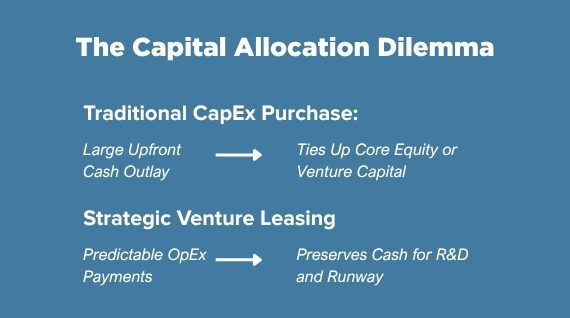
To insulate clinical milestones from cash depletion, startups must strategically transition heavy capital expenditures (CapEx) into predictable operating expenses (OpEx). This structural shift ensures that core equity capital remains deployed where it yields the highest return: driving scientific discovery and advancing intellectual property.
Deconstructing Startup-Exclusive Venture Leasing
Venture leasing operates on a fundamentally different risk model than standard commercial equipment leasing. Rather than underwriting based on historical profitability, specialized lessors evaluate the startup’s underlying technology, the pedigree of its venture backers, and its total raised equity.
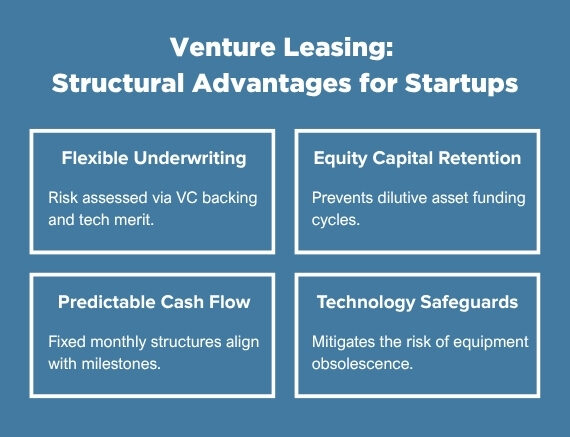
When evaluating life science startup financing options, executives must align the lease structure with the asset’s operational lifecycle.
Fair Market Value (FMV) Leases
Often referred to as operating leases, FMV structures offer the lowest monthly payments. At the end of the lease term, the startup can return the equipment, renew the lease, or purchase the assets at their current fair market value. This is highly effective for high-throughput screening tools or computational hardware prone to rapid technological obsolescence.
Capital Leases ($1 Buyout)
A capital lease treats the equipment as a debt-financed purchase. The monthly payments are higher, but at the conclusion of the term, ownership of the equipment transfers to the startup for a nominal fee of $1. This structure is ideal for foundational, long-lifecycle laboratory infrastructure—such as core analytical chromatography lines and mass spectrometry setups—that retain operational utility for a decade or more.
The Strategic Impact of Runway Extension
The core objective of alternative life science startup financing is the extension of the corporate runway. By avoiding massive, seven-figure upfront cash outlays for laboratory infrastructure, a startup can significantly defer its next institutional funding round.
Consider the operational leverage gained through this preservation:
- R&D Reinvestment: Capital saved from hardware acquisition is immediately directed toward scaling clinical trials, securing critical reagents, and expanding senior scientific talent.
- Milestone Alignment: Fixed, predictable monthly payments allow finance teams to accurately map cash burn directly against upcoming regulatory milestones, ensuring the company reaches its next valuation inflection point before returning to the equity markets.
- Mitigation of Unexpected Variances: Maintaining a robust cash reserve provides an operational cushion against supply chain disruptions, extended assay validation timelines, or protracted regulatory reviews.

Navigating Terms and Avoiding Pitfalls with Life Science Startup Financing
Securing a favorable financing agreement requires meticulous attention to restrictive covenants and hidden operational friction. When negotiating with specialized lenders, life science executives should prioritize three key structural points:
Critical Lease Negotiation Elements
- End-of-Term Transparency: Ensure the contract explicitly defines the calculation metrics for Fair Market Value to avoid inflated buyout demands at lease expiration.
- Prepayment Flexibility: Seek structures that allow for penalty-free or discounted early prepayments should the startup secure a major liquidity event or corporate partnership.
- Absence of Blank Check Warrants: While venture lessors frequently require warrant coverage (typically 1% to 5% of the total lease line), ensure the warrant pricing is pegged tightly to the most recent qualified equity round to prevent unnecessary dilution.
By integrating structured venture leasing directly into the long-term corporate financial strategy, life science companies can build a highly resilient capital architecture. Deploying alternative financing mechanisms to fund physical assets allows founders to shield their equity, optimize their remaining 2026 budgets, and aggressively accelerate their timeline toward commercialization.